
1. Toxic Emissions
The processing of industrial and municipal waste including plastics in a biomass thermal heat plant by burning or unproven gasification technology creates potentially toxic emissions that can irreparably harm our health and damage our natural environment.
The safe operation of such facilities depends upon fail-safe measures to ensure that no toxic or contaminated materials are accepted at the point of delivery. However, MASG has stated that waste materials will be sorted at the point of collection leaving open the real possibility that hazardous materials will be processed at the facility.
These toxins are cumulative and nothing can stop the fine airborne particulate matter that will blow onto your roof where you collect your water to drink, your home grown fruits and veggies, the soil that your children play on, chickens feed off and in the air you breath.
The bioenergy facility is akin to a hazardous chemical processing plant and will operate 24 hours a day, 7 days a week, 365 days a year.
These facilities should not be located near surrounding neighbours including:
Residential homes
Hospitals
Aged Care
Schools
Sports Grounds
Swimming Pools
The Mill Precinct
Botanical Gardens
Gardens and Nurseries
Farmers Markets and growers of organic produce
Holiday Parks
Farm land
MASG reportedly hopes to process up to 40,000 tonnes of waste per year through the $20 million facility. The vast majority of this waste, which may include contaminated and/or hazardous waste, will be trucked to the facility from potential suppliers in north and central Victoria. These include a major poultry producer and the Coliban Water wastewater treatment plant which would provide biosolids in the form of treated sewage sludges derived from human faeces.
Burning waste releases toxic air pollutants, produces toxic ash, is the dirtiest form of energy production and undermines recycling effort (over 50% of recycling has disappeared in Europe as these incinerators need these items to keep the incinerator going).
These types of plants have been rejected by several Shires in Australia.
Why would Mount Alexander Shire Council and MASG even consider installing this type of plant in the Shire when other alternatives are available?
There is no community benefit and the community is burdened with the ongoing costs and risks.
There is a better way of dealing with our waste as we can not burn our way out of Climate Change. Zero waste can be achieved without burning however Council has failed to properly plan for the future.
Biomass Update
Newsflash – Biomass Plants prohibited in the ACT!
Biomass Plants have been prohibited in the ACT under its Waste-To-Energy Policy 2020 – 2025.
This followed an engagement process through consultation with relevant stakeholders and the context of the National Waste Policy which identified key outcomes including:
“New facilities, proposing thermal treatment of waste, by means of incineration, gasification, pyrolysis or variations of these for energy recovery, chemical transformation, volume reduction or destruction will not be permitted in the ACT.”
After originally concealing any mention of a biomass plant on the flyer delivered to some local residents on 1 June 2021, MASG has finally uploaded indicative details of 2 possible options which it says are being considered for a pyrolysis / gasification plant:
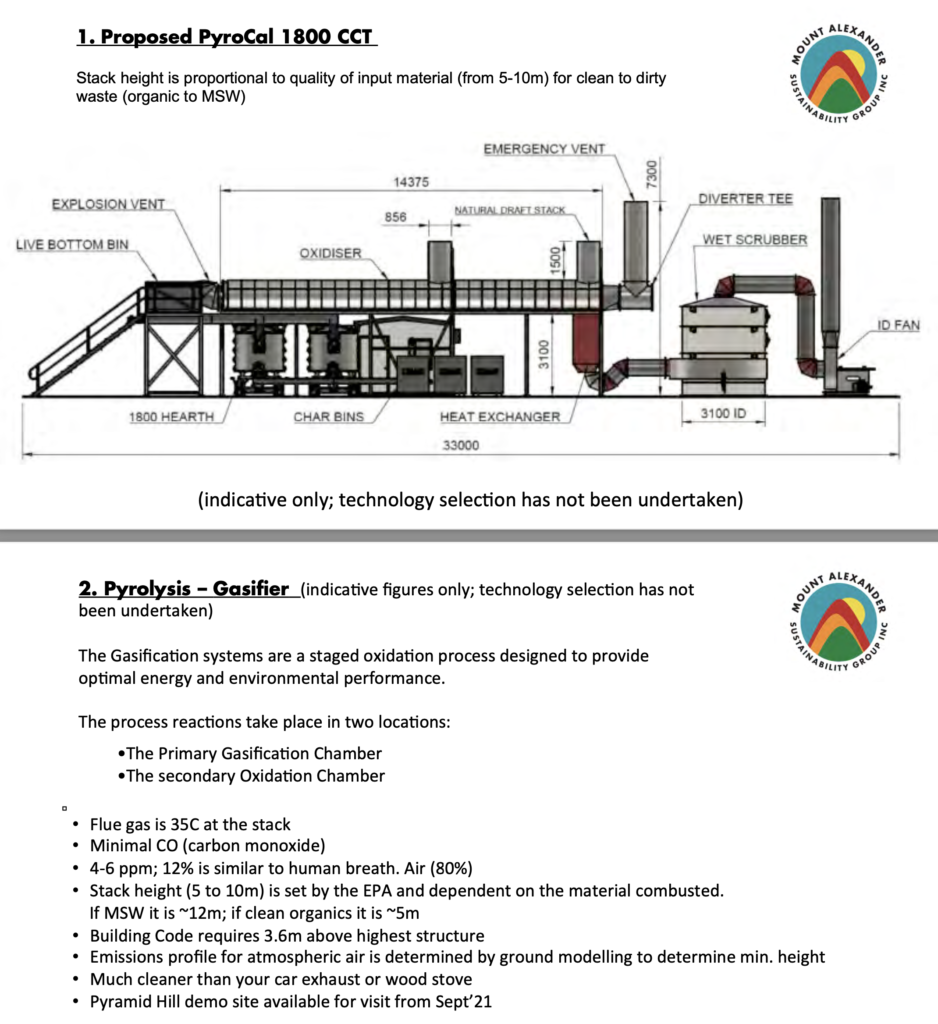
However, MASG has provided no evidence to show that either of these options have been constructed and put into operation in any other comparable facility or location.
Option 1 appears to be based upon a trial facility at the Loganholme Waste Water Treatment Plant in Qld which turns human poo into power:
https://www.pyrocal.com.au/biosolids-to-energy
Option 2 is a small scale demonstration facility at Pyramid Hill 86km north of Bendigo not even available for visit until September 2021:
https://yoursay.advancedenergytech.com.au/home/demofacility
Both options incorporate chimney stacks described as being potentially up to 10m high but these are not shown on the proposed facility layout.
MASG is also at pains to stress that the plant will be safe as it will only accept clean uncontaminated waste which requires it to be correctly separated and sorted at the point of collection. However, MASG has provided no evidence to show how this would be checked at the point of delivery to the Castlemaine facility saying “Once collected, we will have little knowledge of the source location of whats (sic) in the truck”.
And this image is straight from the Pyrocal website:
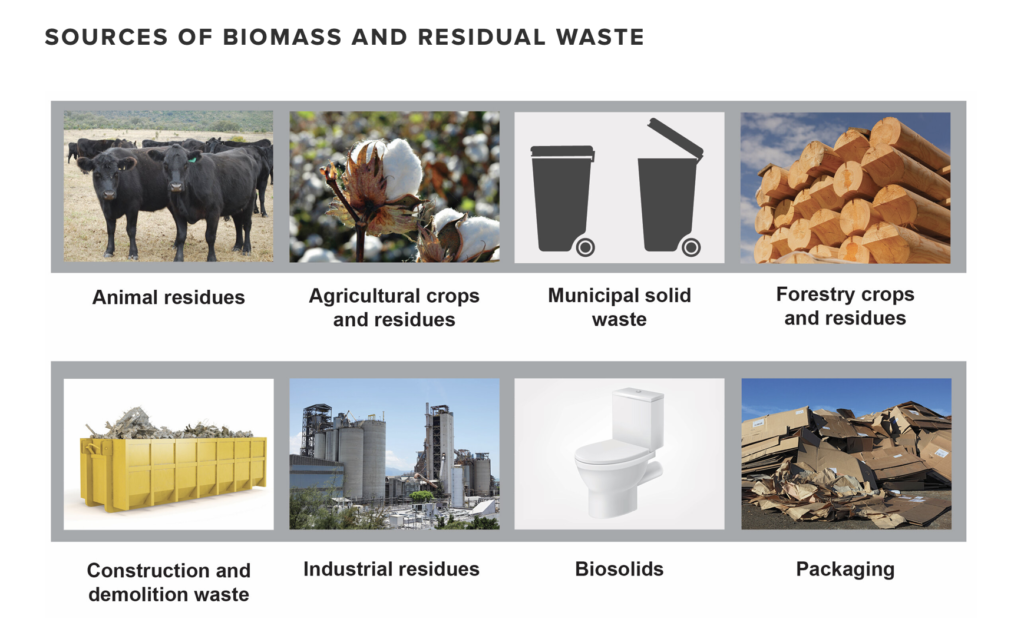
MASG also says: no toxics in = no toxic emissions
Therefore, logic dictates this also means: toxins in = toxic emissions out
MASG admits that the biomass facility will process “unrecyclable quarantine cardboard” and potentially some “unrecyclable quarantine polyethylene plastic” from Dons imported meat products but claims that no other plastics, mixed waste or toxic waste will be received.
How can MASG guarantee that no contaminated/toxic waste will be processed through the facility?
How would MASG even know the exact content of the waste that has been delivered to the facility and what safety procedures are in place to manage and mitigate the risks from such a potentially hazardous event?
MASG says it has been progressing this project for the last 3 years so why has the design of such a fundamental component of the facility still at feasibility stage?
2. No Community or Public Consultation
Contrary to claims that the proposal has been “community-led” or “community-driven” there has been no public consultation and the proposal has been developed and the site selected before the community even heard about it. The first so-called community engagement consisted of MASG dropping off flyers to a small number of residents on 1 June only two days before a Zoom meeting on 3 June in the middle of a COVID lockdown. Furthermore, there was no mention of the biomass burning facility in the flyer which focussed only on the biodigester system.
The second “community engagement” consisted of MASG contacting a few selected neighbours for a face to face meeting in the Senior Citizens Centre on 1 July with a restriction of 36 people including MASG members. For a project that is being promoted as such a good idea for the Shire we would have expected a public meeting properly advertised to the wider community with appropriate lead times to ensure all interested parties could attend. We feel this has been approached in a deceptive manner.
Mount Alexander Shire Council is accountable to our community and appears to have played a significant part in the proposal to date. According to MASG this includes Council’s participation in the site selection process and an MOU which gives MASG “access to council officers and a seat at the table to discuss and influence decisions being made by the council with regard to the environment”.
However, Council has refused to answer any questions from local residents regarding the proposal instead referring them to MASG saying it is not a Council project and has not received a planning permit application.
Despite all this MASG says it has made agreements with DON KR and now publicised the proposal as being almost a formality subject to regulatory approvals and funding from investors.
3. Odours
There is a great risk of significantly increased odours from the storage and processing of waste materials including treated sewage sludges derived from human faeces on a site which already processes meat including imports under licence from overseas. This includes fugitive emissions.
4. Risk of fire, explosion, gas leaks etc.
The proposed site location puts the local community, particularly the sick and elderly, at great risk in the event of fire, explosion, gas leaks, bushfires and other extreme weather events.
A hazardous ammonia leak at the site in 2019 caused the facility to evacuate workers with some of them requiring medical treatment. Residents were advised to close all windows and doors and remain indoors and some evacuated their homes.
Biodigester plants which produce highly flammable methane gas and biomass thermal heat plants which burn dry waste at high temperature both have inherent safety risks. To put both of them together in one facility akin to a chemical processing plant therefore seems to be reckless in the extreme. Who would take liability for any potentially catastrophic consequences of such risks particularly given the site location nearby our hospital and residential homes?
5. Noise
The proposed facility has the potential to generate significantly increased noise from a site which is already in regular breach of regulatory noise limits resulting in the EPA issuing Pollution Abatement Notices which have not been complied with to date.
6. Pollution
There are significant risks from the potential use of contaminated and hazardous waste including treated sewage sludges and the proposed facility would significantly increase the risk of further pollution to our waterways from the site. This is extremely concerning given that George Weston Foods has just been convicted by the Court after being charged by the EPA for polluting a tributary of Campbells Creek from the site.
7. Heritage Values
The proposed facility has the potential to adversely impact on the heritage values of our treasured Castlemaine Botanical Gardens which are registered on the Victorian Heritage Register and situated only a few hundred metres from the proposed site location.
8. Reputation
Castlemaine’s burgeoning reputation as a historic and “bustling town renowned for its eclectic arts scene, rich gold rush history, and growing reputation as a fine food destination” would be irreparably tarnished.
Why should our beautiful town of Castlemaine be the dumping ground for all of North and Central Victoria’s waste and we become known as “toxic town?”
9. Threatened Species
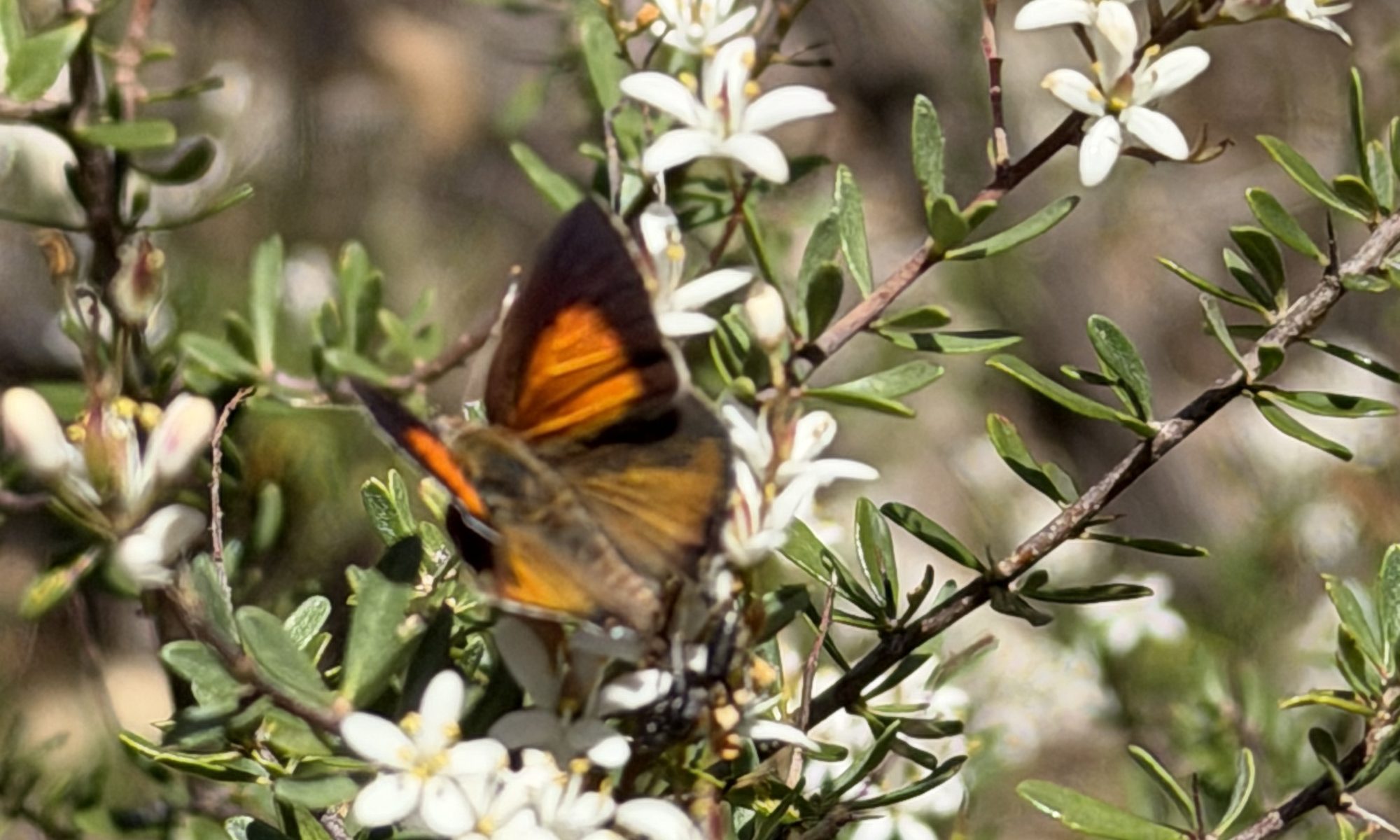
The proposal may have an adverse affect on threatened species such as the endangered Eltham Copper Butterfly which is protected under both Federal and State legislation. It is only found in Victoria in a few geographically separate locations including Castlemaine where a colony exists within only 500m of the proposed site location.
There is also a family of breeding powerful owls within close proximity to the proposed site.
10. Other Concerns
There are numerous other significant concerns regarding the proposal which are too extensive to list individually in this forum.
11. Resources and Links
For more details please see our Resources page.